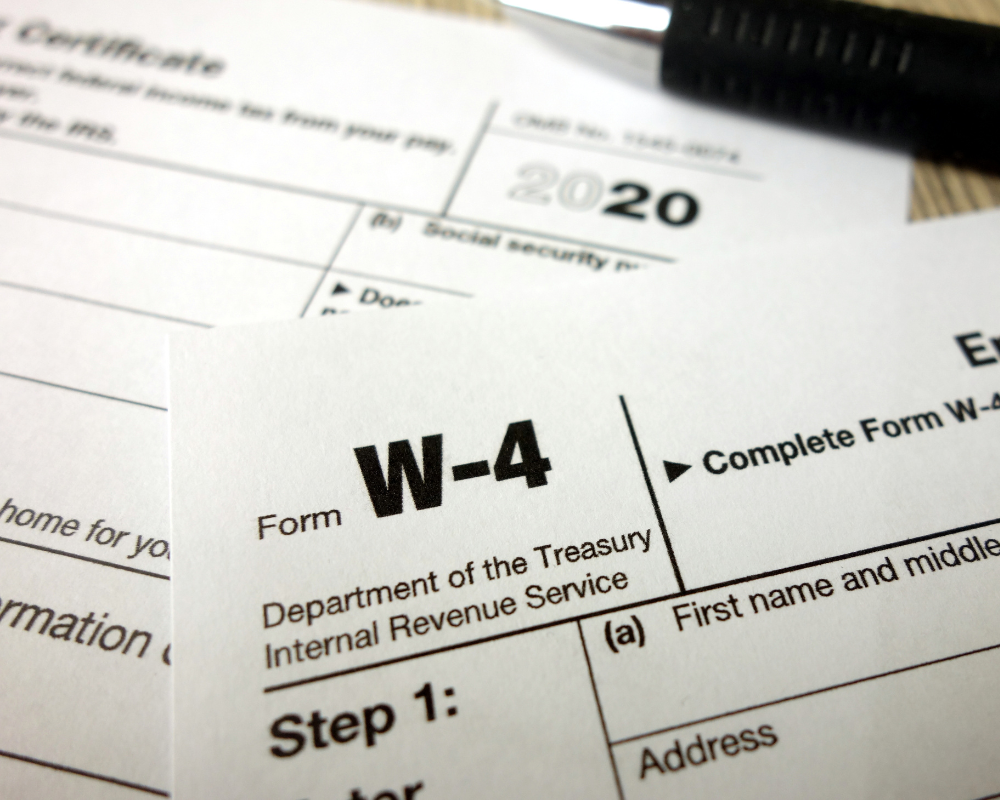
As most already know, the W-4 Form or Employee’s Withholding Certificate needs to be filled out when you start a new job. This form determines how much tax your employer will withhold from your paycheck that needs to be paid to the IRS. But how do you go about recalculating your W-4?
It is essential to recalculate your W-4 often. The W-4 form tells your employer how much they need to withhold from your salary to pay for taxes. There are a lot of people filling their W-4s incorrectly; either holding too much or not holding the correct amount. The best course of action is to seek assistance from a tax professional who will be updated on the general updates made by the IRS.
How to Go About Recalculating Your W-4
With our knowledge, we are able to re-evaluate and recalculate your W-4 and your tax withholdings based on your tax situation. It takes into account your income, if you have multiple jobs, and includes your spouse’s income too. Other income factored also included are stocks, interest dividends, businesses, real estate earnings and the like.
It is important that the correct amount is listed in your W-4. This way, you don’t have a large liability or a large refund at the end of the year when we get ready to file your tax return. We want to be as close to zero as possible when we file a tax return, the reason for this is that the IRS doesn’t pay any interest when we get a timely refund.
Incorrect W-4 forms are very common during tax season, and this is one of the biggest issues. Take some time to sit down to re-evaluate the W-4 and look at your income. If you are still unsure of how to do this, hiring a tax accountant or tax professional to help with recalculating your W-4 can take a load off.
How Can a Tax Accountant or Tax Professional Help with Recalculating Your W-4?
Most tax professionals, like us here at Thompson Tax Group LLC, can help with recalculating your W-4. All we need is your time and information, and we can have this done within a business day.
We had a client in the past who did not know their W-4 was marked as exempted. I wasn’t sure if the employer made the mistake and the client found out at the end of the year after they made a decent amount of money. But finally, they found out that they owed the IRS over $20,000 all because they did not look at their pay stub and did not complete their W-4 correctly.
In addition, W-4 recalculations also help when the IRS is modifying its tax laws. For instance, a lot of people receive refunds in 2021 when they filed their tax returns because the increased child tax credit and other items affecting 2021. However, in 2022, there are many who now owe the IRS money just because they did not recalculate their W4 based on the reduction in child tax credit and the increase in other items they did not take into consideration.